The Small Bishamon Lift Table Order That Taught Me a Big Lesson in Quality
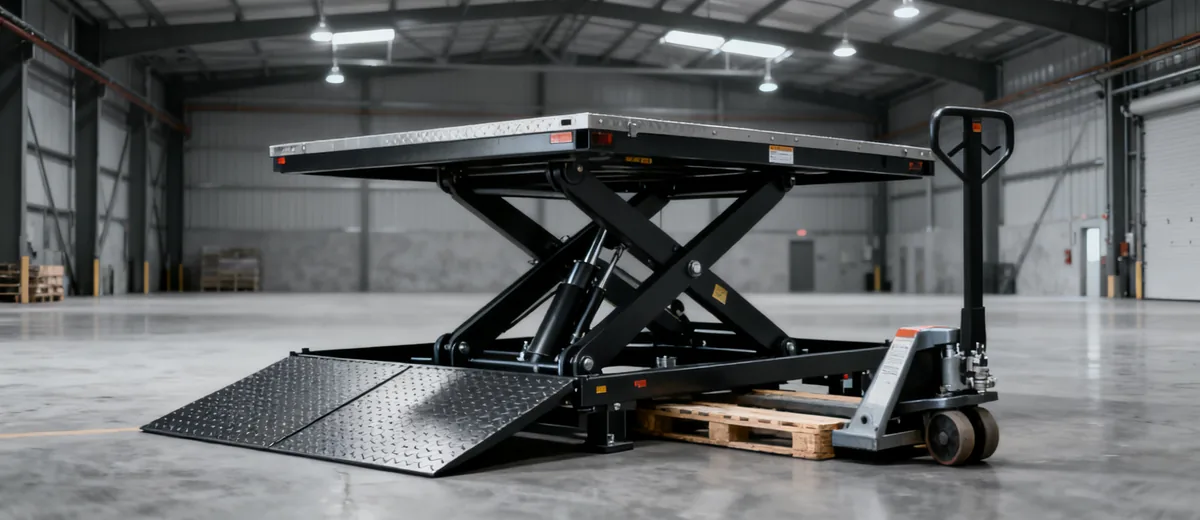
It started with a $300 order—and a sigh from the sales team
In Q1 2024, we got an order for three Bishamon lift tables from a small fabrication shop about 40 miles from our warehouse. Total value: roughly $2,800. Not exactly a headline deal. The sales rep forwarded the purchase order with a note: “Just three units. Probably not worth a full inspection.”
I’m the quality and brand compliance manager here, so I get to make that call. And I’ve been doing this long enough to know that “probably not worth it” is exactly the kind of thinking that gets you into trouble. Here’s what most people don’t realize: small orders are often the ones that slip through production cracks. They get bumped in the queue, assembled with whatever parts are handy, or rushed through final checks because they’re not a priority. That’s not Bishamon-specific—it’s just how manufacturing queues work.
So I decided to do the full 12-point inspection anyway.
The hydraulic leak that almost went unnoticed
Two of the three Bishamon lift tables came through fine. Standard height, standard capacity, no issues. The third one—a 1,000-lb capacity model—looked good at first glance. But when I ran the hydraulic test (meaning I raised and lowered it through five full cycles under load), I saw a thin film of oil on the cylinder rod. It wasn’t dripping, just a sheen. The kind of thing you’d miss if you were in a hurry.
I almost was. I’d already done two units, and a small voice in my head said, “It’s a standard model. We’ve never had problems with this batch. Skip the fifth cycle.” I knew I should run the full test, but thought “what are the odds?” Well, the odds caught up with me. That sheen turned out to be a bad seal—likely from a batch of seal kits that had been sitting on the shelf too long. If I’d shipped it, the customer would have had a slow leak that might not show up for weeks. Then it’s a return, a bad review, and a headache for everyone.
I called our Bishamon OEM contact, sent photos, and they shipped a replacement seal kit overnight. No charge. But here’s the thing: I could have skipped that check. Saved maybe 20 minutes. And if I had, I would have spent hours handling the return, plus risked losing a customer who was testing us with a small order.
Because that’s what this was—a test. The fabrication shop owner told me later he’d been burned by another lift table distributor before. They’d shipped him a unit with a bent fork and then ghosted him on the warranty. So he ordered three units from us to see how we’d handle it. Small order, big stakes.
The turn: from a $300 order to a $30,000 relationship
We fixed the seal, reinspected the unit, and delivered on time. I included a note explaining what happened and what we did about it. The shop owner called me a week later. He said, “Nobody’s ever been that straight with me about a defect.” Then he placed an order for eight Bishamon pallet jacks and a dock lift from one of our OEM partners. That came to about $30,000.
I’d love to tell you I was smart enough to see that coming. I wasn’t. I just didn’t want to ship a leaky lift table. But the lesson stuck: small orders are often the beginning of a longer conversation. And in our industry—where a lift table distributor lives or dies on reputation—that conversation matters.
To be fair, I get why some distributors shrug at small orders. Minimum order quantities exist for a reason, and it’s not cheap to set up a production run for three units. But there’s a difference between “we can’t profitably build three custom units” and “we won’t bother to inspect three standard units.” The first is a business reality. The second is a choice. And it’s the wrong one.
What this means for your own buying decisions
If you’re sourcing material handling equipment—whether it’s a Bishamon lift table, a pallet jack, or a dock lift from an OEM—here’s what I’d want you to know:
- Ask about the inspection protocol. Any lift table distributor can say they do quality checks. Ask what those checks actually are. Do they run a loaded cycle test? Do they check for seal leaks? Do they measure platform deflection? If they can’t answer in specifics, they’re probably not doing much.
- Small orders are a test. If you place a small trial order, see how they handle it. Do they communicate proactively? Do they catch issues before shipping? That’s a better predictor of future performance than a glossy brochure.
- Don’t confuse MOQs with neglect. A vendor might have a 10-unit minimum for custom work—fine. But if you’re buying standard equipment, they should be able to inspect every unit regardless of order size.
- Check the dock lift OEM’s reputation, not just the distributor’s. When we put together our dock lift distributor buying guide, we emphasized this: the best distributor can only do so much if the OEM’s quality control is sloppy. Ask who makes the equipment and what their warranty process looks like.
The lesson I keep relearning
I’ve been doing quality inspections for over four years. You’d think I’d stop being surprised by how much a small order can teach you. But I still catch myself sometimes—like the time I almost skipped the final review on a pallet jack because “it’s basically the same as last time.” That one cost us a $400 rework and a lot of apologizing. So I guess the lesson is: there’s no such thing as a “basically the same” unit. Every order gets the same check, whether it’s one unit or one hundred.
According to ANSI/ITSDF B56.1 (as of 2024), pallet jacks and low-lift trucks require pre-shift inspections by the end user. But that’s the minimum. For us, the standard is higher: every unit that leaves our dock gets a full functional test, a leak check, and a visual inspection for damage. It takes about 15 minutes per unit. That’s not a cost—it’s insurance.
So if you’re a small shop looking at your first Bishamon lift table, or a facility manager trying to pick a lift table distributor, don’t let anyone tell you your order is too small to matter. It matters to you. And if it doesn’t matter to them, find someone else.
Trust me on this one: the vendors who treat your $300 order like a $30,000 order are the ones you’ll still be calling five years from now.

I’m Jane Smith, a senior content writer with over 15 years of experience in the packaging and printing industry. I specialize in writing about the latest trends, technologies, and best practices in packaging design, sustainability, and printing techniques. My goal is to help businesses understand complex printing processes and design solutions that enhance both product packaging and brand visibility.
Leave a technical comment
Do not include operational credentials, personal data or confidential facility information.